
The back row has eyes, too.
A bigger LED wall is a very expensive way to make the words “Q3 strategic priorities” impossible to ignore and no easier to read.
Design for the actual viewing conditions.
A presentation is approved on a laptop, close to someone’s face, in an agreeable office. The audience sees it across a room, around someone’s head, while the speaker moves and the coffee counter makes a compelling rival offer. Design for that room.
Start with the purpose of each screen moment. Does the audience need to read, watch, recognise someone or simply feel a change of atmosphere? A speaker slide, an award name and a performance backdrop need different amounts of information and different pacing.
The dimensions belong in the creative brief.
Confirm the actual canvas, screen layout and any areas the stage will obscure. Agree them with the technical team before finishing animation. The export preset called “standard widescreen” has never visited your custom stage.
Keep essential names, faces and messages in a part of the composition people can reliably see. Treat decorative areas as decoration. When the layout changes, check what happens to the content instead of assuming the playback system will make a thoughtful editorial decision.
Watch it from where the audience will be.
During rehearsal, sit at the back and sides. Can you read the smallest essential line? Does the award winner’s name stay up long enough for their parents to see it? Is the speaker competing with a background that has decided to become the speaker?
Test the actual playback files, including first and final frames, with lighting and audio. A stray filename is a small detail on a laptop and a substantial announcement at eight metres wide.
Give the screen a role in the show.
Screen content works best when its timing is part of the running order. Agree the cue, the person calling it and what appears before and after. For live performance, rehearse the relationship between movement, music and visuals together.
Our Guidewire project brings live performance and digital environments into the same visual world. The useful lesson is to plan the relationship early, while there is still time for the content and the production to influence each other.
The last row may be far away. It is still invited.
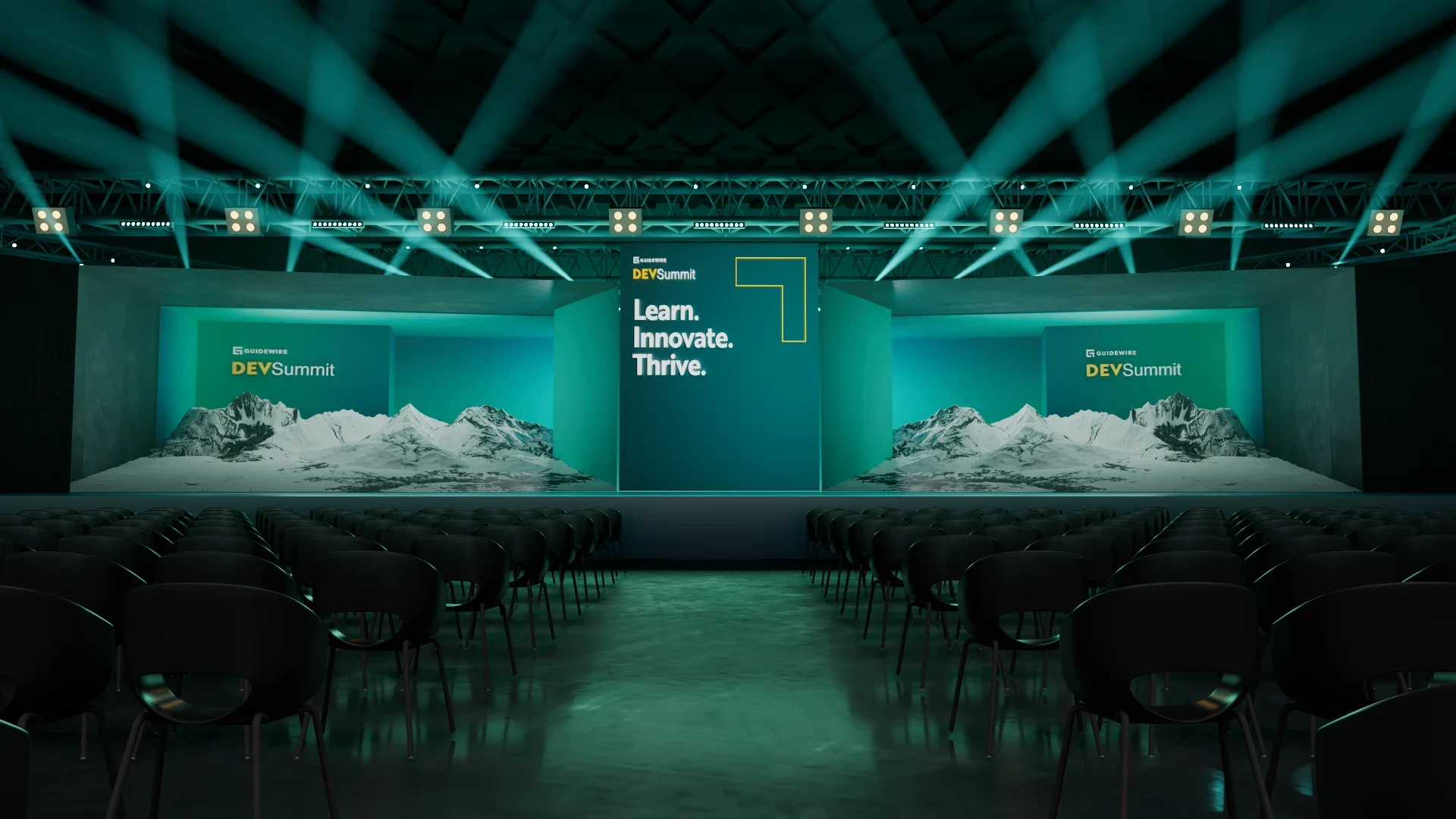 From the portfolio / Guidewire
Developer Summit ↗
Event photography